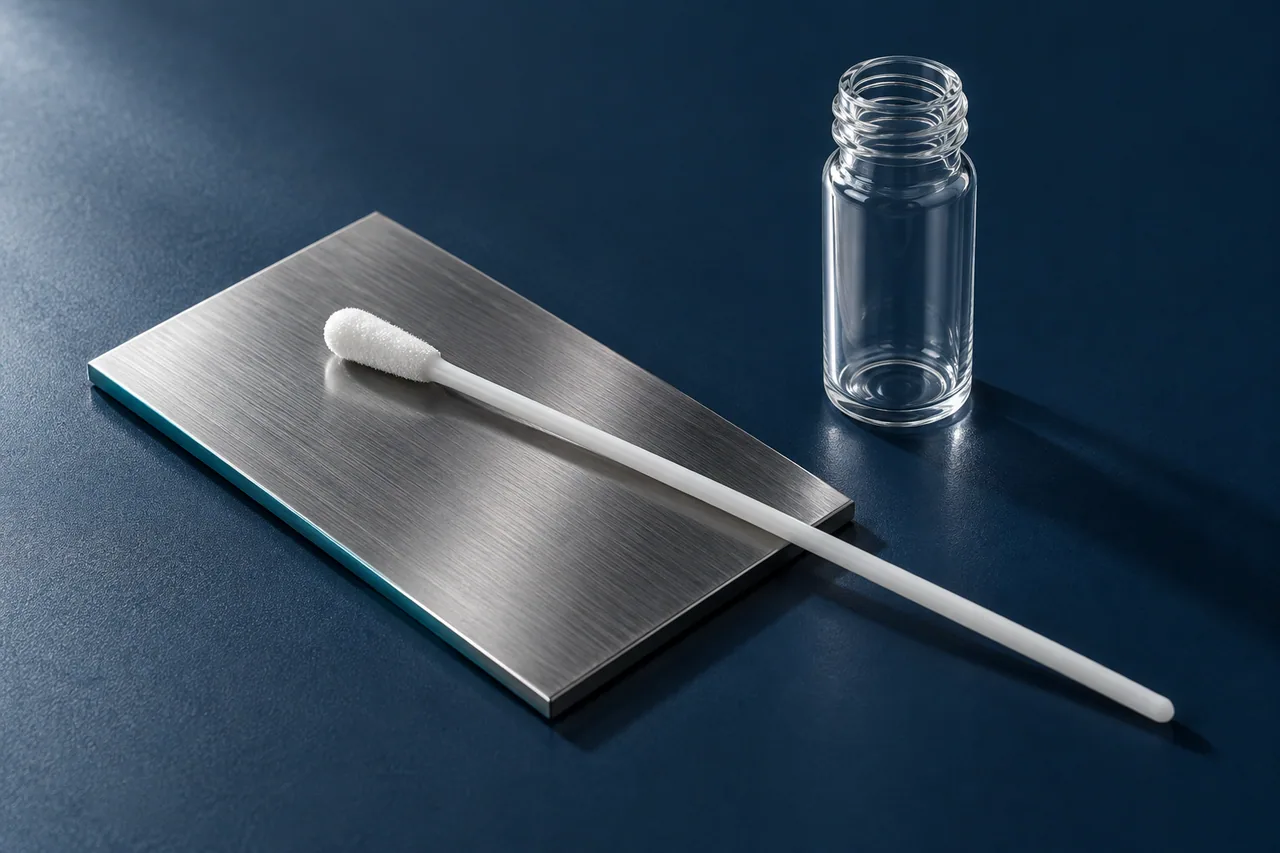
Make the link between test surfaces and routine sampling explicit.
Define the study boundary
List the residue, surface material, sample collection procedure and extraction conditions. These form a study combination; changing one may change what the resulting evidence represents.
Make assumptions visible
Document how test surfaces relate to production surfaces, how the residue is applied and what drying conditions are represented. Record blanks and the handling of results below the quantification capability.
Connect results to use
Before routine use, decide how recovery information will enter the result calculation or acceptance decision. Keep the rationale available with the method rather than as an isolated spreadsheet. The appropriate treatment needs scientific review; this article supplies no universal correction factor.
RECOMMENDED PRACTICE
This article offers editorial working suggestions. It does not replace the original source, site procedures or a documented scientific assessment.
Related regulatory requirements
CV-REQ-000001
Demonstrate sampling recovery ↗
CV-REQ-000006
Justify sampling locations ↗
CV-REQ-000009
Prepare a study protocol ↗
CV-REQ-000010
Understand swab compatibility ↗
CV-REQ-000011
Understand the rinse result ↗
CV-REQ-000016
Select suitable sampling methods ↗
CV-REQ-000017
Establish method capability ↗
CV-REQ-000027