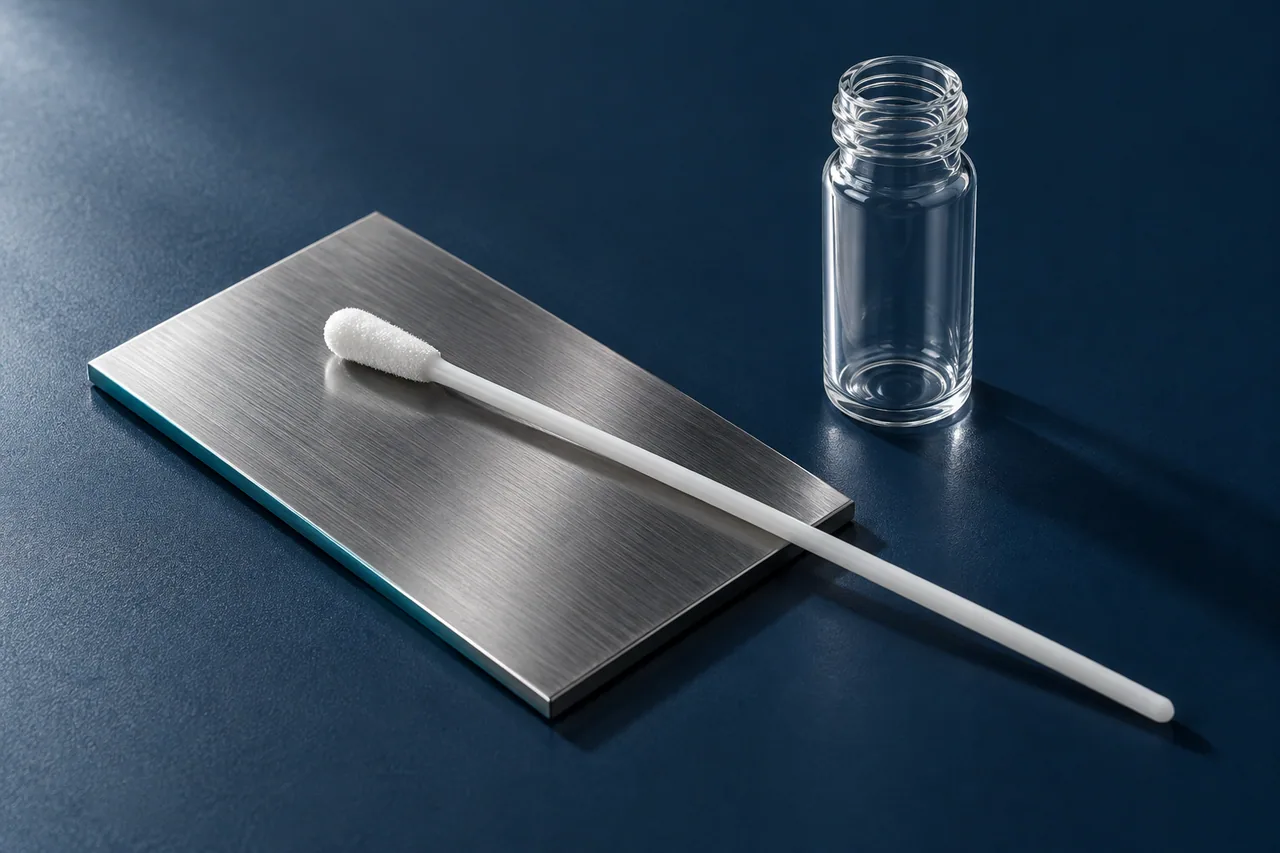
A practical approach to connecting equipment, locations and samples.
Begin with an identifiable surface
Use equipment and component identifiers that people can find during the work. A location name such as “outlet” may be ambiguous when several outlets are present. A photograph or annotated drawing can resolve that ambiguity.
State the sampling question
For each location, record the concern the sample is intended to address. Then connect the collection procedure, sampled area or rinse volume, analytical method and acceptance criterion.
Review the map as a team
Ask a colleague who did not create the map to locate the areas and explain the procedure. Record inaccessible locations and the rationale for the chosen alternative. Revise the map when equipment changes.
RECOMMENDED PRACTICE
This article offers editorial working suggestions. It does not replace the original source, site procedures or a documented scientific assessment.
Related regulatory requirements
CV-REQ-000001
Demonstrate sampling recovery ↗
CV-REQ-000004
Support worst-case product selection ↗
CV-REQ-000006
Justify sampling locations ↗
CV-REQ-000010
Understand swab compatibility ↗
CV-REQ-000011
Understand the rinse result ↗
CV-REQ-000012
Control time before cleaning ↗
CV-REQ-000014
Reflect actual equipment use ↗
CV-REQ-000016
Select suitable sampling methods ↗
CV-REQ-000025
Address manual cleaning variability ↗
CV-REQ-000026
Assess new products before introduction ↗
CV-REQ-000027